
Electric Aerial Vehicles Have Arrived & They'll Change Transportation Forever
Move over Jetsons, electric aerial vehicles are moving from futuristic concept to regulated, test-flown reality. Positioned to change personal transportation forever, this trend is driven by rapid advances in batteries, motors, and computers. Highly automated, electrically powered aircraft—often capable of vertical takeoff and landing—are being developed for short, practical trips.
Among the highest-profile developers, Joby has positioned its electric air-taxi program around the idea that commercial success hinges less on eye-catching prototypes and more on certification, pilot training, and repeatable operations. In response to FAA progress on powered-lift operating rules, the company has emphasized preparing pilots for early service using high-fidelity simulators and aligning training with how these new aircraft are expected to be flown in the real world. That focus matters to shoppers and operators alike, because the long-term value of any new aircraft category depends on predictable safety processes, scalable training pathways, and standardized operations—not just impressive demo flights. (Joby)
Archer’s Midnight has become one of the most concrete “near-term” examples of electric air taxis being planned as a real transportation product rather than a tech showcase. Public details around its intended use highlight short flights measured in minutes—designed to shuttle people between key destinations—while keeping noise and emissions substantially lower than traditional helicopter operations. The aircraft is described as piloted and sized to carry up to four passengers, a configuration that targets premium yet mainstream demand: business travelers trying to make a tight connection, eventgoers looking to skip gridlock, and daily commuters willing to pay for time savings when roads are saturated. (AP News)
Wisk’s Generation 6 pushes the category in a different direction by making autonomy the centerpiece rather than an eventual upgrade. The company describes Gen 6 as a self-flying, all-electric air taxi designed for four passengers, with human oversight built into the operational concept. Published performance targets include a cruising speed of 120 knots and a range of 90 miles with reserves, which frames the aircraft as a tool for repeatable, short-to-medium hops rather than long-haul travel. The larger story is strategic: removing the onboard pilot is positioned as the path to scaling service economically while maintaining commercial-aviation-grade safety expectations. (Wisk)
Vertical Aerospace’s latest presentation of its aircraft—now branded Valo—leans into the customer experience and the “commute replacement” narrative. The company markets it as an electric option for trips like city-to-airport transfers, while publishing clear targets that make the use case easy to imagine: a listed cruise speed of 150 mph, a stated range of 100 miles, and seating for four passengers plus one pilot. Design notes highlight low-noise technology and a cabin meant to feel spacious and luggage-friendly, signaling a product aimed at people who want convenience and comfort, not an experimental ride. (Vertical)
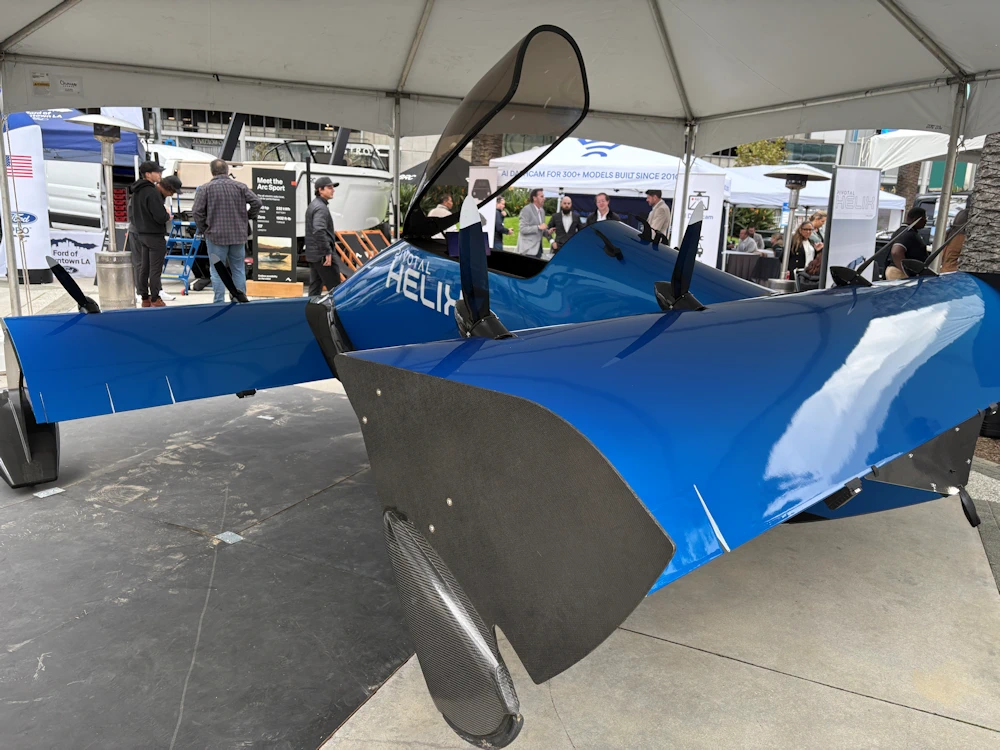
Pivotal’s Helix takes a different approach from the multi-passenger air-taxi concepts by aiming at simplified, single-seat personal flight in a light eVTOL format. The aircraft is presented as a compact “personal aerial vehicle” with a published cruise speed of 55 knots (about 62 mph), a maximum electric endurance of 20 minutes, and a maximum electric range of about 20 miles, positioning it for short, local flights rather than long-distance travel. Safety-forward features such as a triple-redundant flight control system, radar-guided autoland, and a ballistic parachute are emphasized as part of the overall concept of making flight feel more approachable, while practical details like a relatively small footprint and transportability lean into the idea of ownership rather than fleet-only operation. (Pivotal). Helix is also notable because it is positioned to comply with FAA Part 103 ultralight rules in the United States, which means it is marketed as not requiring a pilot license, while still carrying important operational limitations, including where it can fly. Pivotal’s sales materials emphasize that training is required before delivery, reflecting the reality that simplified aviation still needs structured instruction and disciplined operating habits to be safe.
For prospective buyers, partners, and early adopters, the most persuasive promise of electric aerial vehicles is not that they will replace cars or airliners, but that they can reclaim time in high-friction corridors where roads fail and helicopter economics do not scale. The decision framework increasingly centers on certification progress, training rules for powered-lift operations, infrastructure readiness, and whether a vehicle’s published performance aligns with real routes and real weather. As federal rules for integrating powered-lift aircraft mature, the market looks less like a science project and more like an emerging category where serious, comparable products can compete on safety, reliability, and total cost of operation.
ExplainGenie is for informational purposes only. Best attempts are made to ensure reliability and timeliness of information. ExplainGenie does not sell products or services of any kind for sale.