
How "Smart Diabetes Watches" Are Improving Blood Sugar Monitoring
“Glucose monitor watches” has become a popular phrase to indicate the pairing of smartwatches and glucose monitors as a cohesive approach to diabetes management. The most reliable versions pairing a body-based continuous glucose monitor with a smartwatch. These then display readings, trends, and alerts via app on your wrist. Accurate readings depend on a sensor that pierces the skin.
Dexcom’s current approach shows why the wrist display has become so appealing: it turns glucose data into something that can be checked in seconds, without pulling out a phone. With Dexcom G7, “Direct to Apple Watch” can send CGM data to a compatible Apple Watch over Bluetooth, which means the watch can remain useful even when a phone is not nearby. That creates a genuinely different day-to-day experience for walking, yard work, errands, and exercise, because alerts and trend awareness can stay close at hand. Dexcom also supports Apple Watch viewing for its G6 system when paired with a compatible smartphone, reinforcing the broader idea that the watch is a glanceable window into continuous data rather than a standalone glucose sensor. (Dexcom)
Abbott’s FreeStyle Libre ecosystem takes a similar “watch as a window” direction through the Libre app, which the company describes as providing up-to-the-minute glucose readings on a smartphone or smartwatch, including a Libre app for Watch. For many people, that wrist view becomes the most practical part of CGM life: it makes it easier to notice whether glucose is rising, falling, or stable during meals, activity, and sleep, and it reduces the temptation to constantly check a phone. In that sense, the watch experience is less about novelty and more about making continuous glucose data feel normal and easy to act on as part of everyday routines. (FreeStyle Libre)
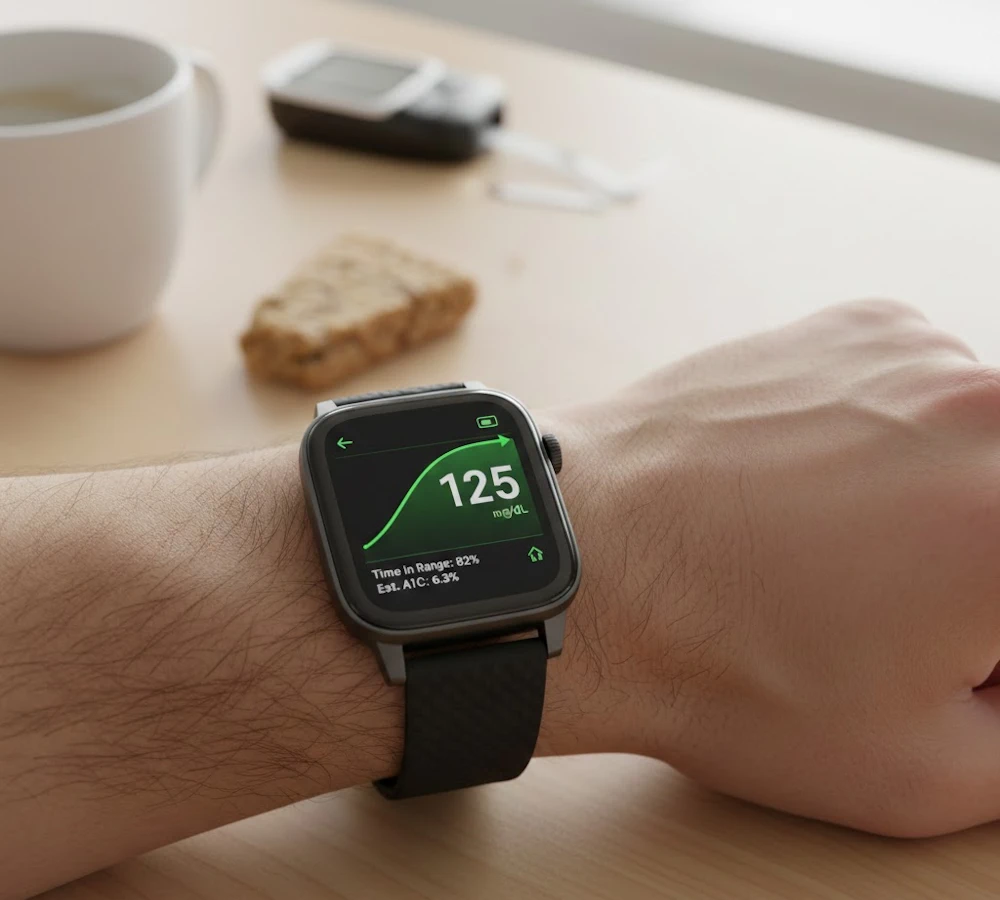
Medtronic’s “diabetes watch” integration experience often centers on the MiniMed 780G system, where pump and sensor trends can be viewed through the MiniMed Mobile app and surfaced on a compatible Apple Watch. For users already managing insulin delivery alongside CGM data, the wrist display can be especially helpful because it keeps trend awareness discreet and quick during meetings, social situations, and travel. The key improvement is not that the watch becomes the medical device, but that it reduces friction around seeing trend direction and checking key numbers, which can support calmer, more confident decision-making throughout the day. (Medtronic)
Senseonics takes a distinct path with Eversense, which uses a long-term sensor approach and then relies on a phone app as the primary display. Eversense materials note that Apple Watch can provide a snapshot of Eversense CGM data as a secondary display, while also clarifying that the watch does not connect directly to the transmitter and should not replace the primary display. That model still fits as a “smart diabetes watch” because the wrist becomes a convenient place to glance at current glucose and trends, even if the phone remains the hub for deeper interaction, settings, and full alert management. For people who value long-wear sensor concepts and still want quick wrist visibility, that secondary-screen approach can be a meaningful quality-of-life upgrade. (Eversense)
Across all these systems, the real improvement comes from how the glucose monitoring smartwatch changes behavior: it makes glucose awareness faster, more discreet, and more continuous. Trend arrows and graphs are often more informative than a single number, and a wrist display encourages frequent, low-effort check-ins that can help people notice patterns around meals, activity, stress, and sleep. At the same time, the “smart” part can introduce a modern risk: missed alerts if phone settings, Bluetooth connections, operating system updates, or notification configurations change. Reports and safety guidance have emphasized the importance of confirming alert behavior after updates and periodically reviewing notification settings, because CGM and pump alerts are only helpful when they reliably break through.
The most useful way to think about glucose monitor watches is that they are display and alert tools that sit on top of proven CGM systems, not replacements for them. When they work well, they reduce the mental load of diabetes management by making glucose trends easier to see, faster to notice, and simpler to share in daily life. When shopping, the safest framing is to prioritize FDA-authorized CGM systems and treat any “no-sensor, watch-only glucose” claim with suspicion, since regulators have warned that these products can be misleading and risky. Used with proper training and a realistic understanding of what the watch does and does not do, smartwatch CGM displays can be one of the most practical improvements in modern glucose tracking.
ExplainGenie is for informational purposes only. Best attempts are made to ensure reliability and timeliness of information. ExplainGenie does not sell products or services of any kind for sale.