
Log Cabin Homes Provide Affordable Living Solutions
As rising interest rates make home-buying increasingly difficult, many Americans are looking at alternative home solutions. Numerous options fit the bill, including log-cabins. Log‑cabin living has come a long way. Advances in modular construction, CNC‑milled timbers, and interstate delivery now let buyers order a fully finished residence—or a tiny park‑model retreat—without felling a single tree themselves. Herein we'll delve into the range of today’s residential cabins, from tow‑in park models to sprawling, multi‑wing lodges, each line anchored by signature floorplans.
Zook Cabins – modular homes shipped nationwide
Built in climate‑controlled Pennsylvania shops, Zook’s modular log homes roll to the site in finished sections, complete with wiring, plumbing, and code‑rated insulation. The catalog runs from the 650‑square‑foot Pioneer, a one‑bedroom starter with vaulted great‑room ceiling, to the Mountaineer Deluxe, whose two‑story layouts climb past 2,000 square feet and three bedrooms. Mid‑range favorites include the Alpine—up to 30 × 56 feet and a dedicated master suite—and the Timberline, offering 1,600‑ to 2,300‑square‑foot plans under a dramatic vaulted ridge beam. Even the single‑story Frontier can stretch to three bedrooms and two baths in 1,500 square feet. All models share certified modular construction and the option to tweak walls, porches, and finishes before the house ever leaves the factory.
Southland Log Homes – kit packages for DIY or contractor builds
Southland ships precut log packages and detailed construction manuals to all 50 states. Buyers can start small with the 1,371‑square‑foot Bryson, a three‑bedroom plan that tucks a loft and half‑bath under steep gables. At the other end of the scale, the 4,700‑square‑foot Cherokee spreads four bedrooms and five baths across two stories plus a basement, capped by full‑length porches front and rear. The single‑level Jackson strikes a 3,029‑square‑foot middle ground, pairing three bedroom suites with a 68‑foot‑deep footprint ideal for wide lake lots. Every plan can be ordered as full‑log, hybrid timber‑frame, or a mix, and Southland’s design team edits layouts at no extra charge.
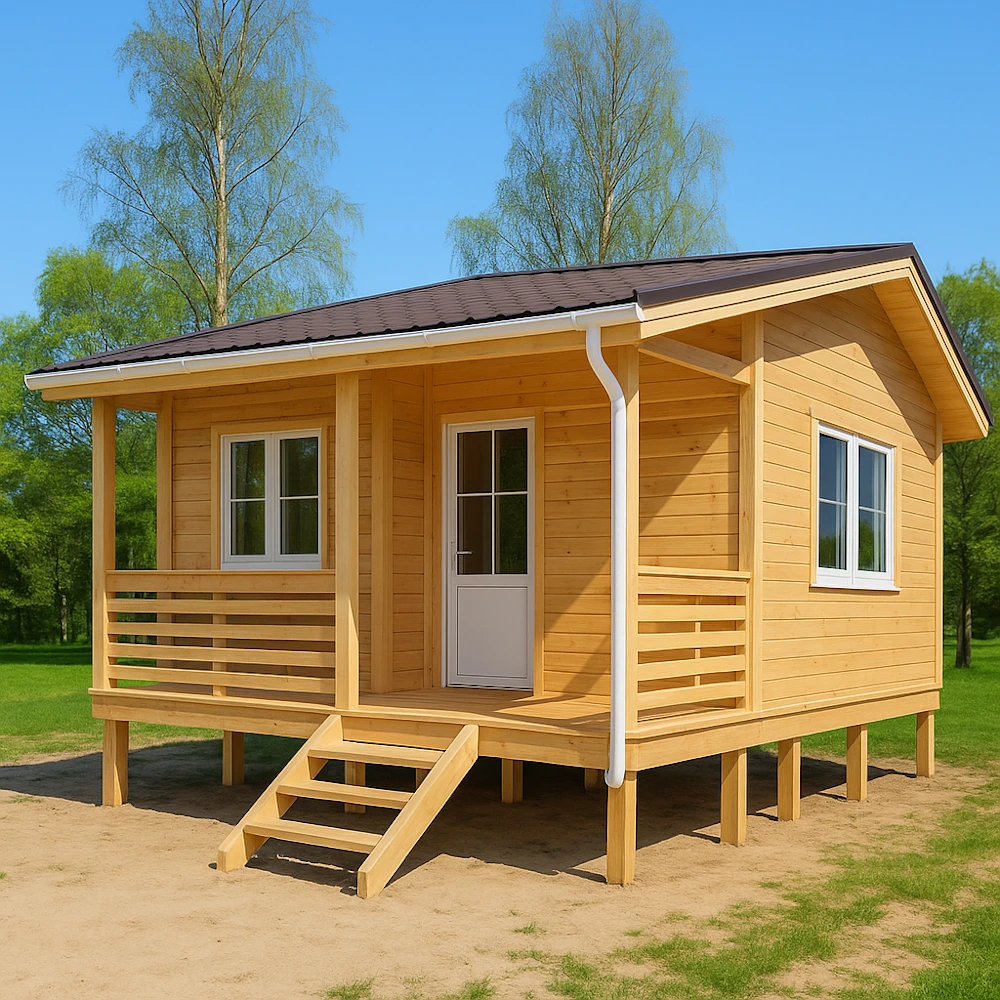
Lancaster Log Cabins – park‑model cabins on wheels
Where zoning or campground regulations favor RV‑style structures, Lancaster builds “real rustic log cabins on wheels,” preassembled on steel trailer frames and delivered turnkey. Models such as the Rancher offer true solid‑log walls, full kitchens, and covered porches in a footprint light enough to tow to a resort or hunting lease. Because the units ship finished—plumbed, wired, and trimmed—they can open for rental income the same weekend they arrive.
Conestoga Log Cabins – kit cabins from 143 to 2,500 square feet
Conestoga’s DIY‑friendly kits label every log and ship with assembly diagrams. The 727‑square‑foot Vacationer squeezes two bedrooms and a full kitchen into a 17 × 31 shell ideal for weekend retreats. A step up, the Riverview lays out 1,232 square feet on one level, using wide gable glass to pull daylight into its open great room. Families wanting loft space can choose the Heritage, which layers a sleeping loft over the main level for a compact 1,100‑square‑foot footprint. Conestoga also publishes dozens of sub‑1,100‑square‑foot plans for off‑grid parcels or accessory dwellings.
Comparing pathways to a log‑cabin home
Prefab modules like Zook’s shorten build times to weeks and arrive 90 percent finished; site work focuses on foundations, utility hookups, and final trim. Kit packages from Southland or Conestoga demand more sweat equity—or a local contractor—but reward owners with wider customization and the tactile satisfaction of stacking their own timbers. Park models from Lancaster bypass permanent‑foundation codes altogether, rolling in as movable tiny homes that still boast 100 percent solid‑log construction.
Regardless of pathway, today’s cabins mix rustic charm with modern systems: energy‑efficient windows, PEX plumbing, and spray‑foam or SIP roof panels. Lofts turn roof volume into bedrooms; wrap‑around porches extend living space outdoors; and optional timber‑frame accents elevate interior character. Whether you picture a weekend hideaway, a lakeside rental fleet, or a year‑round family lodge, the American log‑cabin market now offers a floorplan—and a construction model—suited to almost every site, budget, and degree of do‑it‑yourself ambition.
ExplainGenie is for informational purposes only. Best attempts are made to ensure reliability and timeliness of information. ExplainGenie does not sell homes or offer products or services of any kind for sale.