
Say Goodbye To Old Toilets: Stunning New Models Handling Business
Toilets are undergoing a quiet renaissance as more households treat them as long-term upgrades. Newer models focus not only on reliable flushing, but also on easier cleaning, quieter operation, integrated functions, and modern design. From entry-level to fully integrated smart toilets, the latest toilets make everyday use better while improving bathroom look and feel.
Behind this shift is a growing market for advanced and smart toilets that is expanding much faster than the category did a decade ago. Global research on smart toilets estimates that this segment alone is worth several billion dollars and is expected to more than double in size by the end of the decade, with annual growth in the high single to low double digits as more homes incorporate bidet features, automatic functions, and water-saving technologies. At the same time, the U.S. Environmental Protection Agency’s WaterSense program notes that replacing older high-volume toilets with efficient models can cut toilet water use by 20 to 60 percent, translating into thousands of gallons of savings and meaningful reductions in water bills over the life of the fixture (EPA).
The list of options begins with the most advanced styles, integrated smart toilets with built-in bidet systems, exemplified by the TOTO Neorest series. These units combine a tankless one-piece toilet with warm-water cleansing, heated seats, automatic lids, deodorizing functions, and self-cleaning bowl technologies that help keep surfaces fresher between manual cleanings. By integrating all of these elements into a single fixture, this style effectively replaces both a standard toilet and a separate bidet attachment, offering a higher level of comfort and hygiene in a compact, sculpted form that suits contemporary bathrooms (TOTO Neorest).
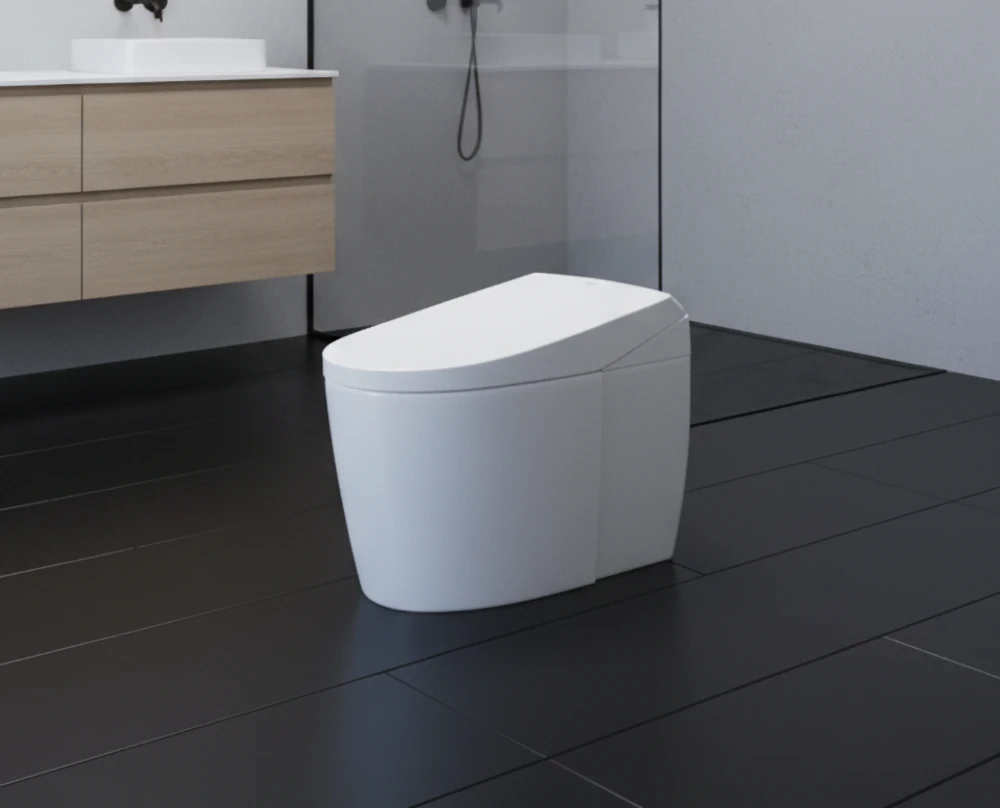
Intelligent one-piece toilets from brands such as Kohler provide another expression of this trend, balancing advanced features with a sleek, space-saving profile. Models in the Veil collection, for example, integrate a tankless bowl with dual-flush operation, an internal bidet wand, heated seat options, and hands-free flushing in a fully skirted shape that hides plumbing and trapways. Some versions add extras such as night lights, automatic lids, and UV sanitization for the cleansing wand, creating a feature set that feels closer to high-end hospitality than to the utilitarian fixtures common in older homes (Kohler Veil Collection).
Efficiency-focused gravity toilets remain important for households that prioritize water savings without electronic components, with models such as the Niagara Stealth standing out for ultra-low consumption. The Stealth line uses a patented hydraulic mechanism to deliver a full, quiet flush using as little as 0.8 gallons of water, well below the federal standard of 1.6 gallons per flush and even below many high-efficiency options. By eliminating traditional flappers and relying on precision-engineered internals, these toilets reduce the risk of leaks and running water, offering a straightforward way to cut utility costs and environmental impact while still providing dependable performance (Niagara Stealth).
Wall-hung and skirted toilets represent another major style, especially in bathrooms where space and easy cleaning are priorities. Wall-hung systems conceal the tank within the wall and suspend the bowl above the floor, freeing up floor space and simplifying mopping while giving the room a lighter, more architectural appearance. Even in floor-mounted versions, fully skirted bowls with smooth sides and hidden trapways minimize crevices where dust and grime collect, making maintenance easier than with older exposed-trap toilets that require detailed scrubbing around complex shapes (Duravit).
Mainstream high-efficiency toilets from brands such as American Standard continue to drive much of the replacement market by combining familiar layouts with modern performance. WaterSense-certified models in these lines typically use 1.28 gallons per flush while emphasizing strong bowl-clearing action and reduced clogs, often with elongated bowls and “chair-height” seating that many adults find more comfortable. Because they are designed for standard rough-ins, plumbers can usually remove a decades-old fixture and install a new high-efficiency toilet in the same location during a single visit, reusing existing supply lines and minimizing disruption (American Standard).
The process of switching from an older toilet to one of these newer styles has been eased further by incentives and standardized products. Water utilities around the country now offer rebates to encourage replacement of older 3.5–6.0 gallon-per-flush toilets with WaterSense-labeled models, recognizing that toilets account for nearly 30 percent of indoor residential water use and that upgrades can significantly reduce demand on municipal systems. In some municipalities, homeowners receive bill credits or cash rebates when they provide proof of installation, turning a routine plumbing project into an opportunity for long-term savings on both water and sewer charges (Laredo Toilet Rebate Program).
Taken together, these trends in smart, ultra-efficient, wall-hung, and comfort-height toilets show how rapidly the category is evolving beyond basic white fixtures tucked into the corner of a bathroom. Growing market demand, clear water and cost savings, and the availability of models that fit standard plumbing rough-ins have made toilet replacement a predictable, manageable project for most households. For anyone evaluating a bathroom upgrade, exploring these newer toilet styles reveals a wide range of options that promise better hygiene, lower utility bills, easier cleaning, and a more modern look, all supported by a global smart toilet market that analysts expect to keep expanding through the end of the decade.
ExplainGenie is for informational purposes only. Best attempts are made to ensure reliability and timeliness of information. ExplainGenie does not offer products or services of any kind for sale.