
The Complete 2026 Harley Davidson Truck Lineup
Harley-Davidson trucks occupy special niche, with a strong identity of attitude, heritage, and visual presence. These trucks are professionally upfitted to translate the Harley Davidson image into a pickup format. We'll look at who builds them, which trucks they are based on, and why buyers choose them.
At the center of the concept is Tuscany Motor Co., which produces the current Harley-Davidson truck lineup as a specialty vehicle builder. In practical terms, that means a standard truck platform is transformed through a coordinated package of styling changes, suspension-related upgrades, wheels and tires, badging, and other appearance details meant to create a finished custom-truck identity. The value proposition is similar to other premium upfitted trucks: the buyer is not purchasing a box of parts or a project, but a completed vehicle intended to feel cohesive from day one.
That “finished vehicle” angle matters because Harley-Davidson trucks are less about one single mechanical feature and more about the overall ownership experience. A buyer who likes the Harley-Davidson name usually is not looking for a subtle trim package. The appeal is a truck that immediately looks different from a standard pickup on the dealer lot, with stronger street presence and a more obvious custom-truck persona. Tuscany also emphasizes warranty and ownership support, which is important for people who want the custom look without piecing together aftermarket work on their own.
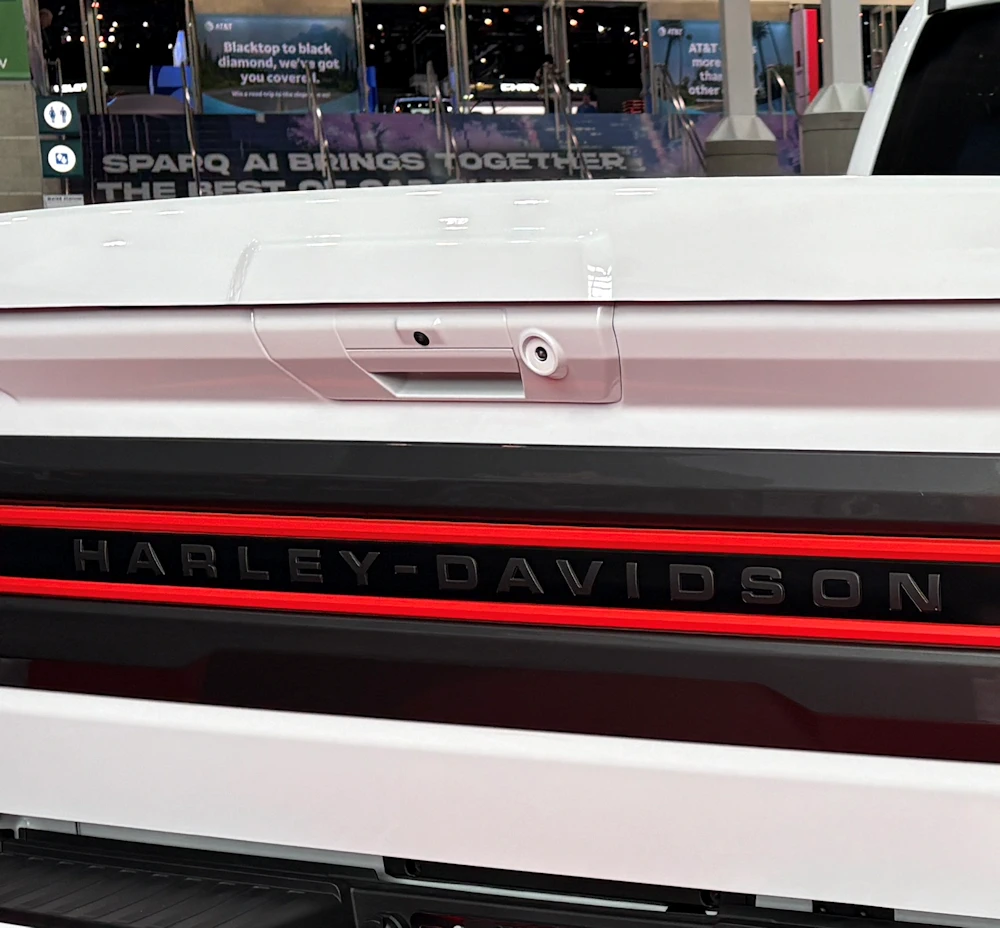
The current Harley-Davidson truck lineup is relatively focused rather than sprawling. Tuscany’s Harley-Davidson page centers on two vehicles: the Ford F-250 and the GMC 1500. The Fox Factory Vehicles Harley-Davidson brand page reinforces that structure by highlighting the GMC and Ford Harley-Davidson truck programs. That narrower lineup is significant because it suggests the brand is being used selectively, not simply stamped across every possible pickup. Instead, the Harley-Davidson identity is being attached to specific trucks that fit the image Tuscany is trying to project.
The Ford F-250 is one of the most recognizable foundations for the Harley-Davidson truck formula because heavy-duty pickups naturally support a bold, oversized visual treatment. In this context, the F-250 gives the package a strong, substantial base: a large truck with commanding proportions that can carry custom wheels, suspension changes, aggressive exterior detailing, and interior branding without feeling overdone. For buyers, the attraction is partly scale. A Harley-Davidson F-250 is meant to feel imposing before it ever starts moving, and that makes sense for a badge associated with muscular, high-presence machines.
The GMC 1500 plays a different role in the lineup. Where the F-250 leans into the heavy-duty side of the custom-truck world, the GMC 1500 offers a full-size half-ton platform that is easier for many owners to use as a daily driver. That changes the ownership equation. A Harley-Davidson GMC 1500 can still deliver the dramatic styling, upgraded stance, and signature identity of the package, but on a truck that may feel more approachable for everyday commuting, errands, and weekend use. In other words, it broadens the appeal beyond buyers who specifically want an HD-format pickup.
One of the most interesting things about Harley-Davidson trucks is that they are ultimately brand-expression vehicles as much as transportation. They are not aimed primarily at buyers who want a stripped, work-focused truck or a hidden-value option. They are aimed at people who want the truck to make a statement. The Harley-Davidson name carries a built-in cultural meaning in the United States—customization, attitude, heritage, and a certain kind of Americana—and Tuscany is effectively borrowing that emotional vocabulary and applying it to pickups. The truck becomes a branded lifestyle object as much as a utility tool.
That helps explain why the package works best for buyers who already understand the appeal of premium upfitted trucks. These vehicles tend to attract people who would otherwise spend time and money upgrading a standard truck anyway. The difference is that the work is pre-coordinated: the visual theme is already developed, the truck is sold as a finished product, and the buyer does not have to manage separate vendors, installation schedules, or a long aftermarket build timeline. Financing can also be simpler when the package is part of the initial purchase rather than added later in stages.
It is also important to separate Harley-Davidson trucks from factory off-road specials or heavy-duty work packages. These are not primarily being sold as hardcore trail trucks or purely functional commercial tools. Their main purpose is identity, presentation, and the convenience of buying a professionally upfitted custom truck that carries a famous American badge. Some buyers may value the suspension and wheel-and-tire changes for real-world stance and road presence, but the deeper reason people shop them is usually emotional rather than purely mechanical.
In the end, Harley-Davidson trucks make the most sense when viewed as specialty branded pickups built around presence and convenience. Tuscany Motor Co. uses the Ford F-250 and GMC 1500 as the current foundations, creating vehicles that translate the Harley-Davidson image into a truck format without forcing the buyer into a one-off aftermarket project. For shoppers who want a pickup that feels more personalized, more dramatic, and more lifestyle-driven right from the start, that formula is the whole point.
Sources
tuscanymotorco.com
vehicles.ridefox.com
ExplainGenie is for informational purposes only. Best attempts are made to ensure reliability and timeliness of information. ExplainGenie does not sell off road vehicles or offer products or services of any kind for sale.