
The Complete Bobcat Equipment Guide
Bobcat built the first true skid‑steer loader, the four‑wheel‑drive M400, in 1960. It launched a compact‑equipment industry and the eponymous Bobcat brand itself. The company’s name reflects the machine’s toughness and agility, traits that still define today’s Bobcat product line. From tracked loaders to skid-steerers, here's a look at top Bobcat models to consider this year.
Compact Track Loaders
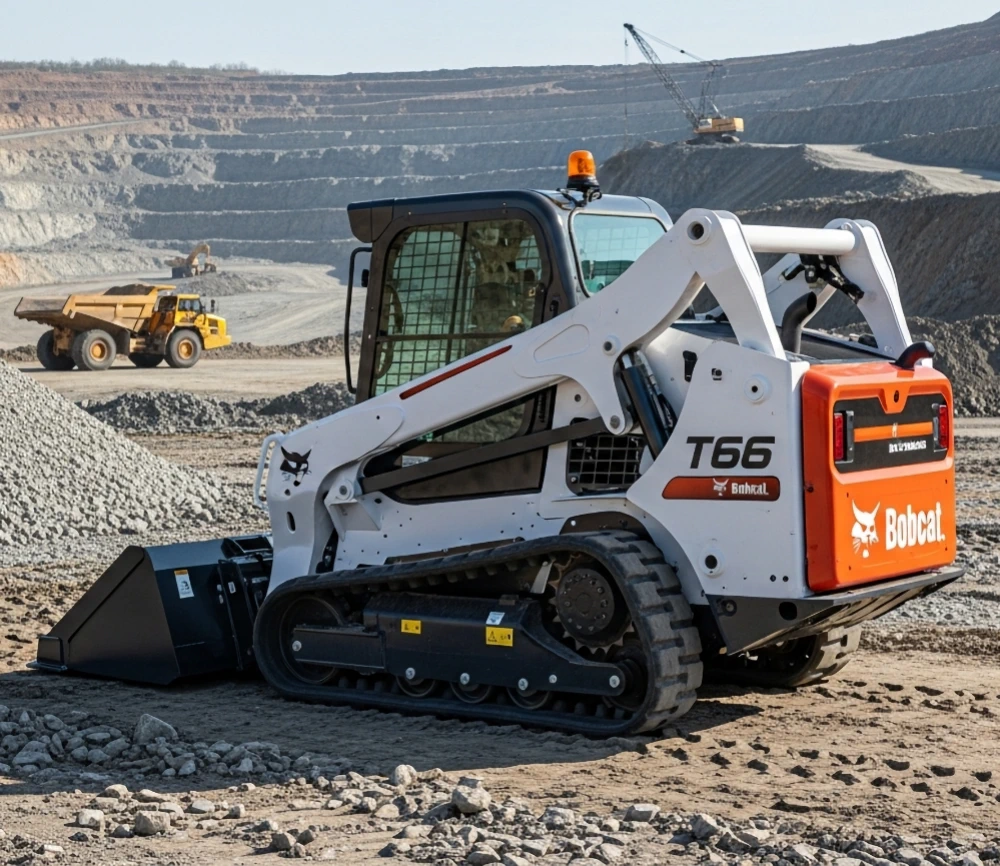
Bobcat’s R‑Series T66 shows how far the original loader concept has evolved. A 74‑horsepower, non‑DPF engine drives powerful hydraulics, while a redesigned, sealed‑and‑pressurized cab keeps operators comfortable in harsh weather. Tie‑downs are now built into the frame for faster transport, and components sit in isolated pods to reduce vibration‑induced wear.
Where lift height rules, the T770 answers with 11 feet of vertical reach and the muscle to keep trucks and hoppers fed in any ground conditions. Its high‑output hydraulics and robust undercarriage make it a go‑to choice for demolition or site prep contractors who rely on one machine to push, carry, and power dozens of attachments.
Skid‑Steer Loader
The S76 carries the R‑Series hardware into a wheeled platform instead of with tracks. Its cast‑steel lift arm and inline‑engine layout boost rated operating capacity and visibility, while 74 horsepower and a vertical‑lift path let the loader place pallets or scrape barn alleys with equal ease. Inside, a roomy premium cab borrows suspension seating and clear‑side enclosures from Bobcat’s larger machines, underscoring how operator comfort has become a performance feature.
Compact Excavator
Popular on tight urban sites, the 3‑ton E35 combines Zero‑Tail‑Swing agility with class‑leading creature comforts. A roomy, pressurized cab with a larger suspension seat, excellent sightlines, and intuitive joystick controls help operators stay precise when trenching next to foundations or utilities. Factory options such as the clamp‑ready arm and quick‑coupler prep turn the excavator into a versatile material‑handler, not just a digger.
Toolcat Utility Work Machine
The UW56 Toolcat blends hydrostatic all‑wheel drive, a Category 1 three‑point hitch, and a front quick‑attach plate to run more than 45 attachments. With enough capability to make a John Deere Gator blush, there are two selectable drive modes let operators toggle between transport speed and fine work control, while the Tier 4 diesel simplifies service and improves cold‑weather starts. For municipalities, campuses, or large estates, one UW56 can mow in the morning, sweep leaves at noon, and move pallets by afternoon.
Utility Tractor
The UT6066 utility tractor extends Bobcat’s attachment‑first philosophy to row‑crop chores. A 66‑horsepower diesel pairs with a 12×12 three‑range power‑shuttle transmission that changes direction without clutching—ideal for loader work. Standard self‑leveling loader arms, Category 2 three‑point hitch, rear PTO, and multiple hydraulic remotes maximize implement versatility, letting the tractor bale hay, clear snow, or pull a no‑till drill as seasons demand.
One DNA, Many Jobs
Across loaders, excavators, utility work machines, and tractors, Bobcat threads common themes: compact footprints, quick‑swap attachment interfaces, and cabs engineered for long days. More than six decades after the M400 rewrote job‑site logistics, the brand continues to prove that big productivity can come in small, agile packages—still living up to the bobcat’s namesake qualities of toughness, speed, and sure‑footed control.
ExplainGenie is for informational purposes only. Best attempts are made to ensure reliability and timeliness of information. ExplainGenie does not sell Bobcats or offer products or services of any kind for sale.